
“Fur” Is Making a Comeback, Re-entering Fashion in a Sustainable Way. Hairless humans seem unable to part with garments that resemble animal fur—perhaps a primal calling from the distant past.
●●
Over the past few years, fur has been shut out by the industry, with fur products becoming virtually non-existent on luxury shelves. As one of the most expensive fabrics in the fashion industry, the product value of fur shifted due to the wave of sustainable fashion. It was burdened with negative evaluations such as bloodshed, cruelty, and consumerism, becoming a taboo element that people avoided mentioning.
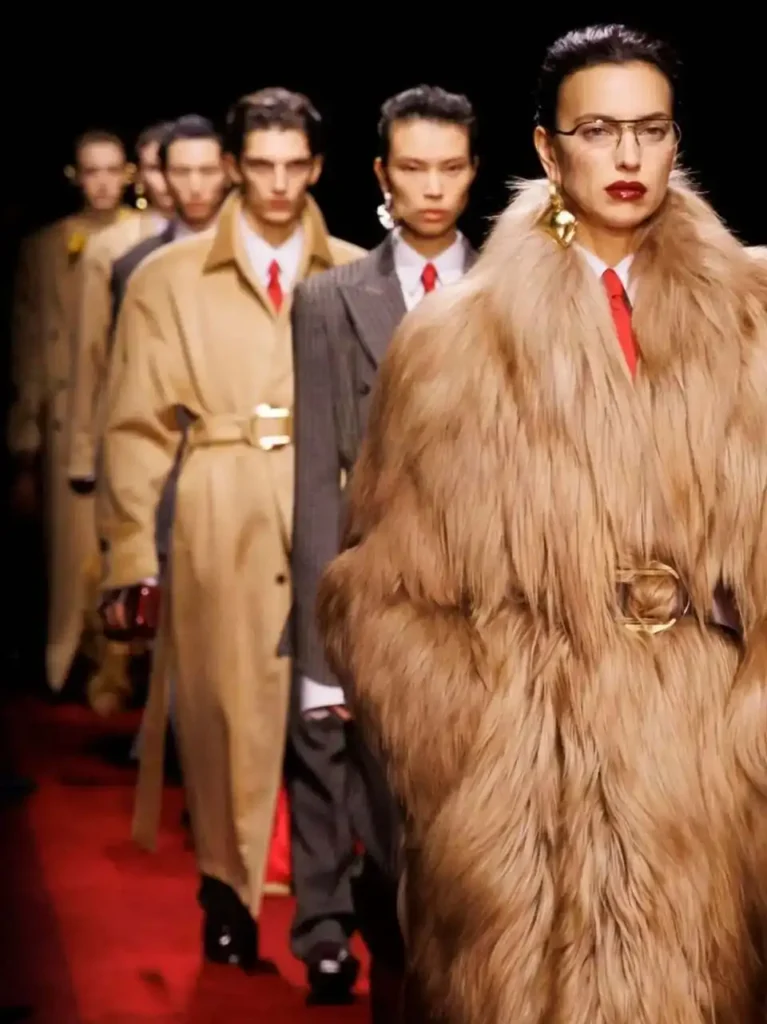
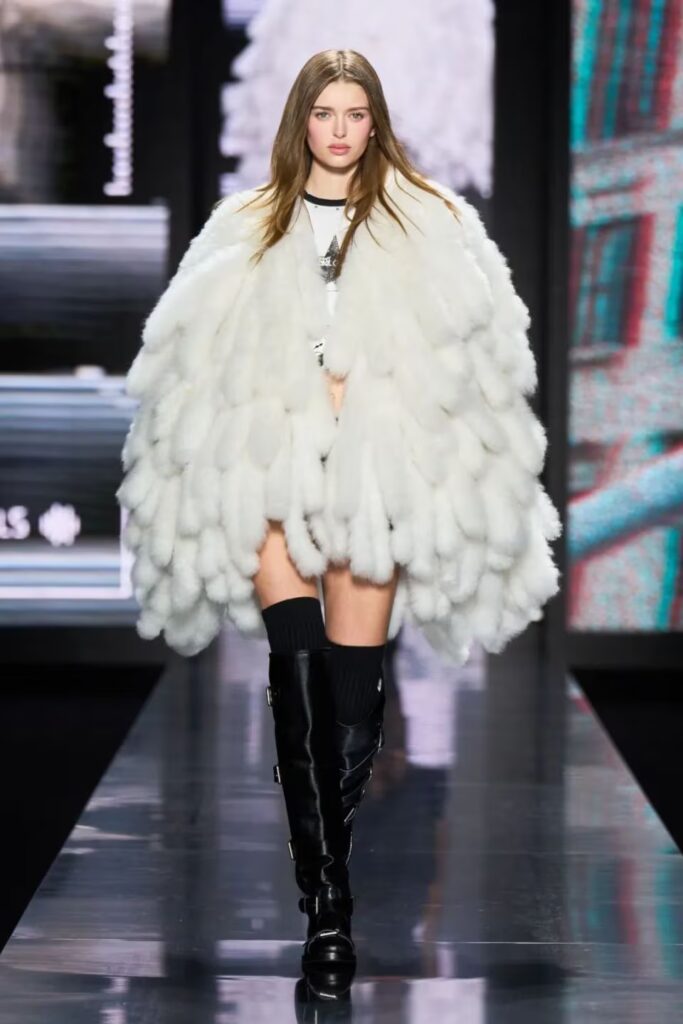
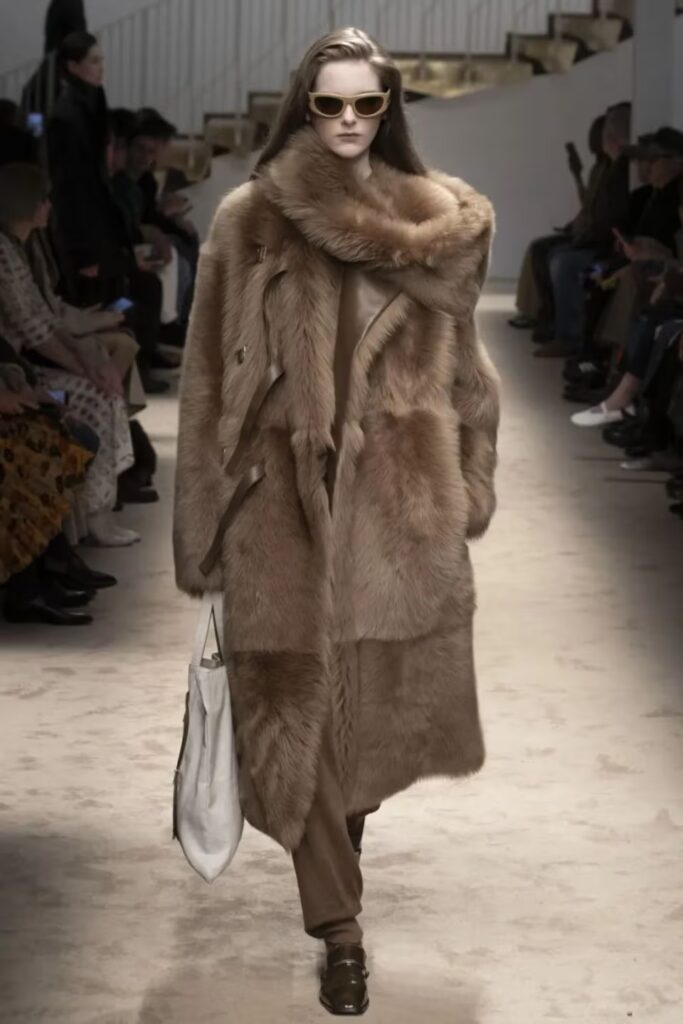
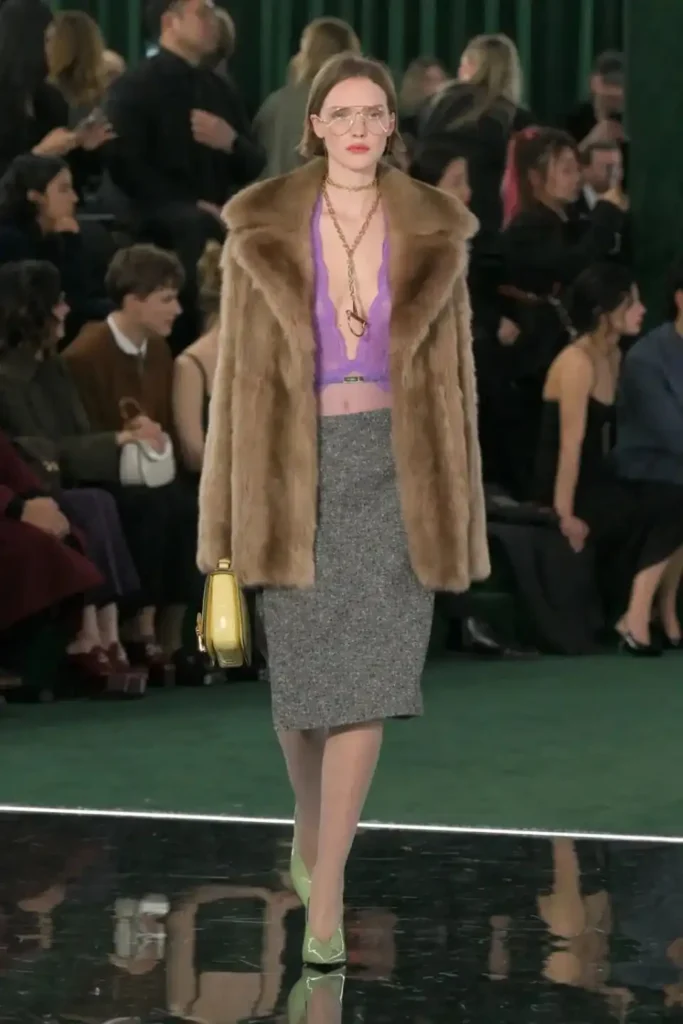
However, during the recently concluded Autumn/Winter 2025 fashion month, the presence of “fur” was ubiquitous—it seems to have returned. Is the dominant tone of “green fashion” beginning to waver?
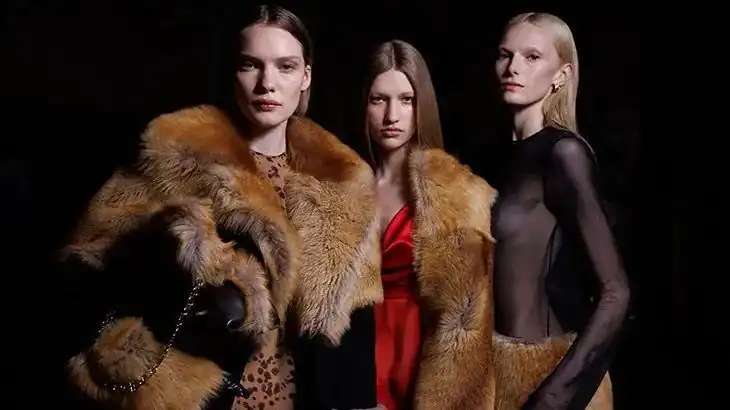
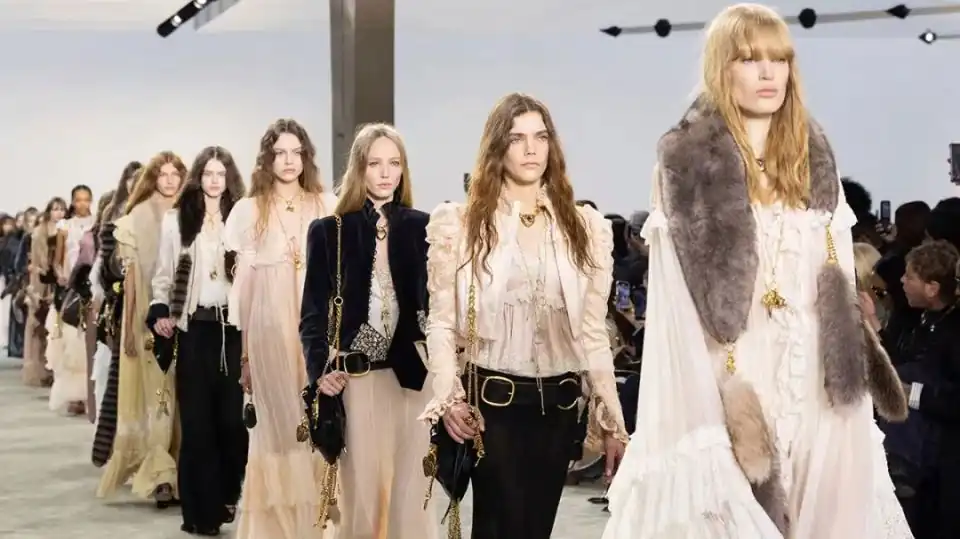
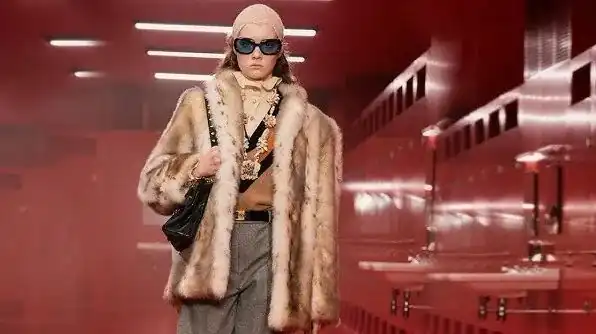
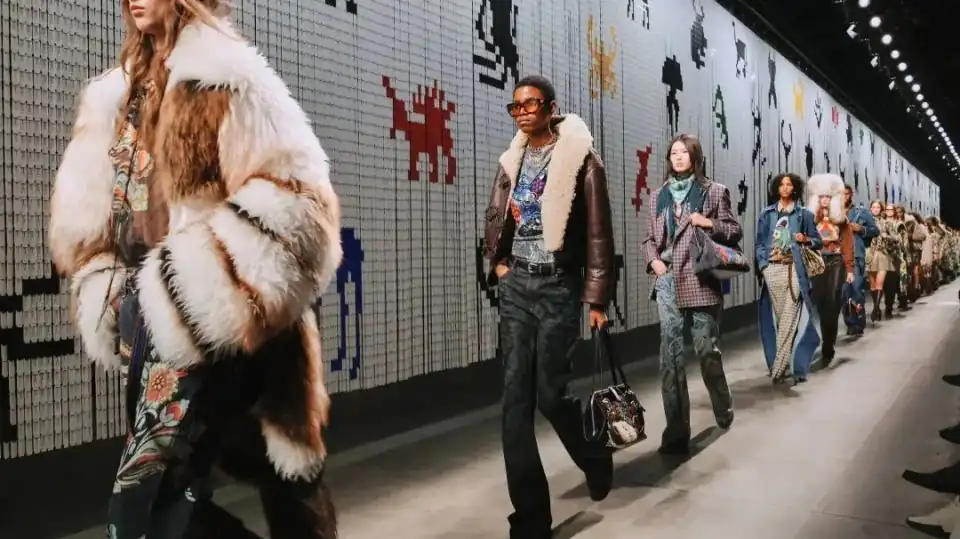
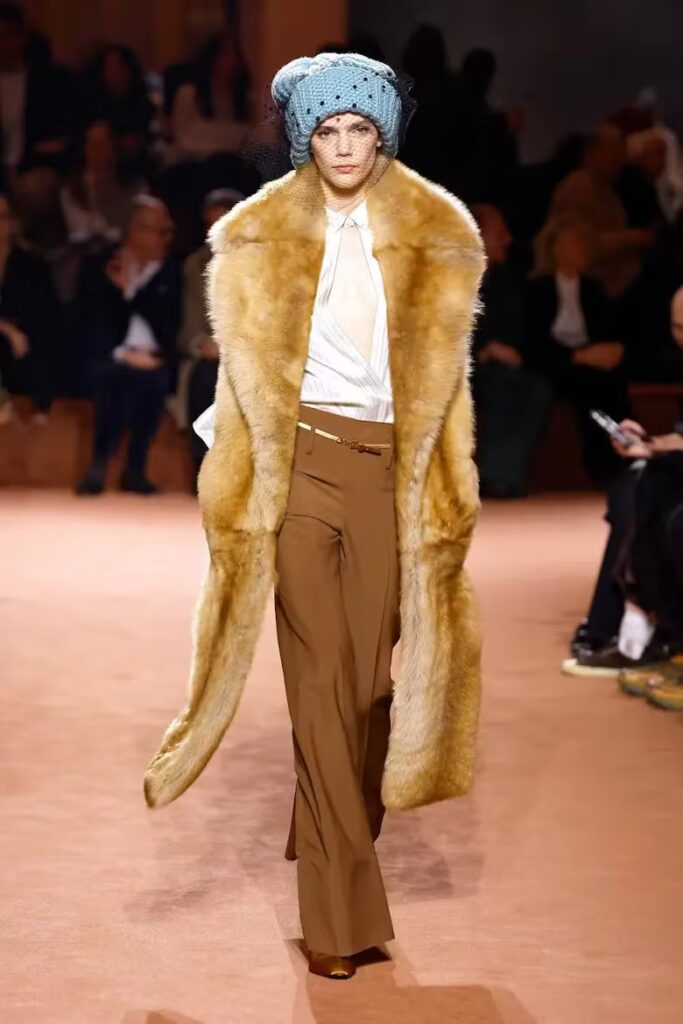
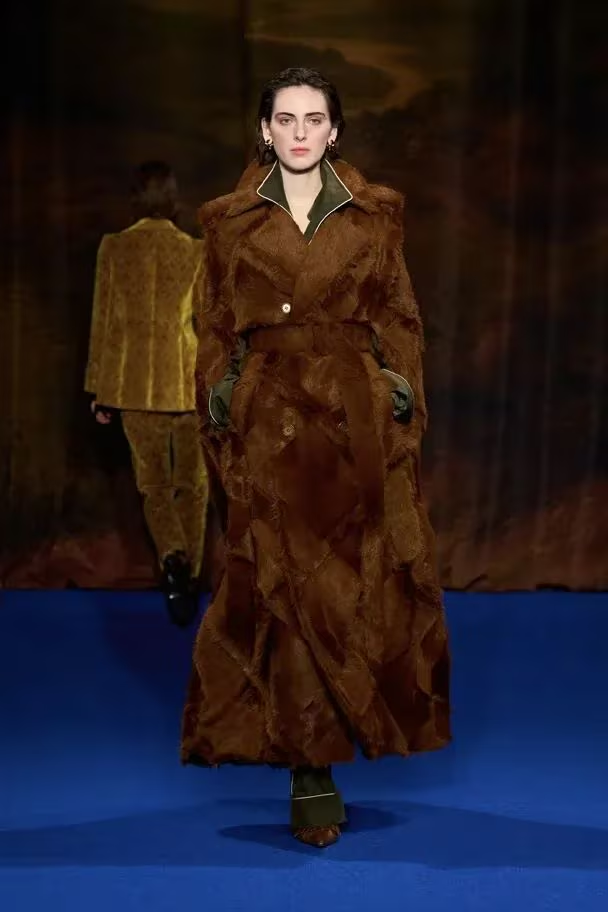
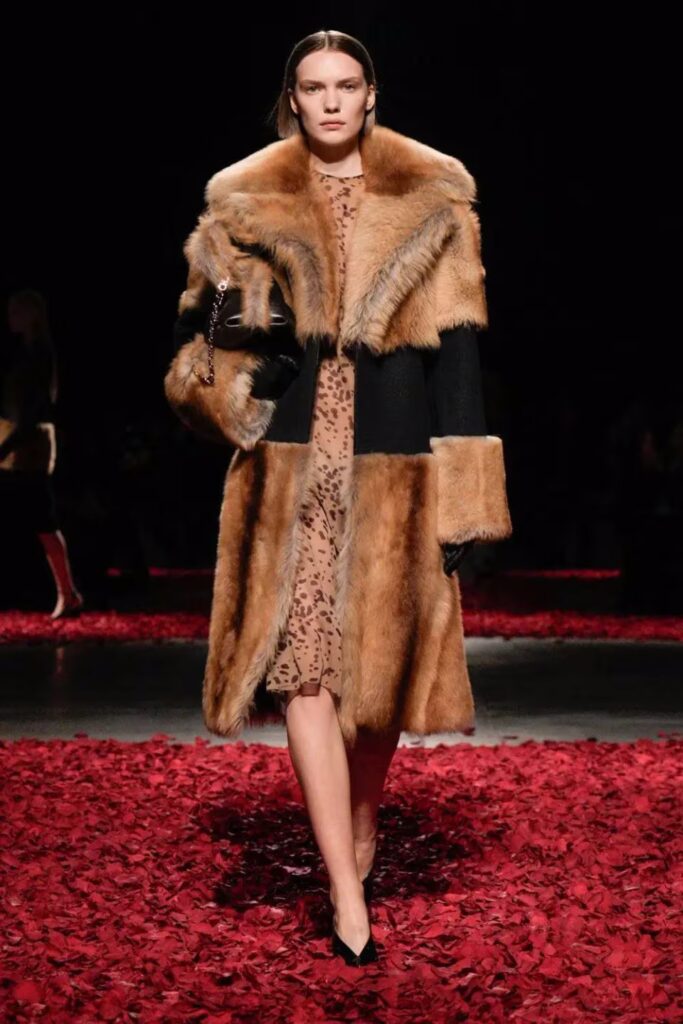
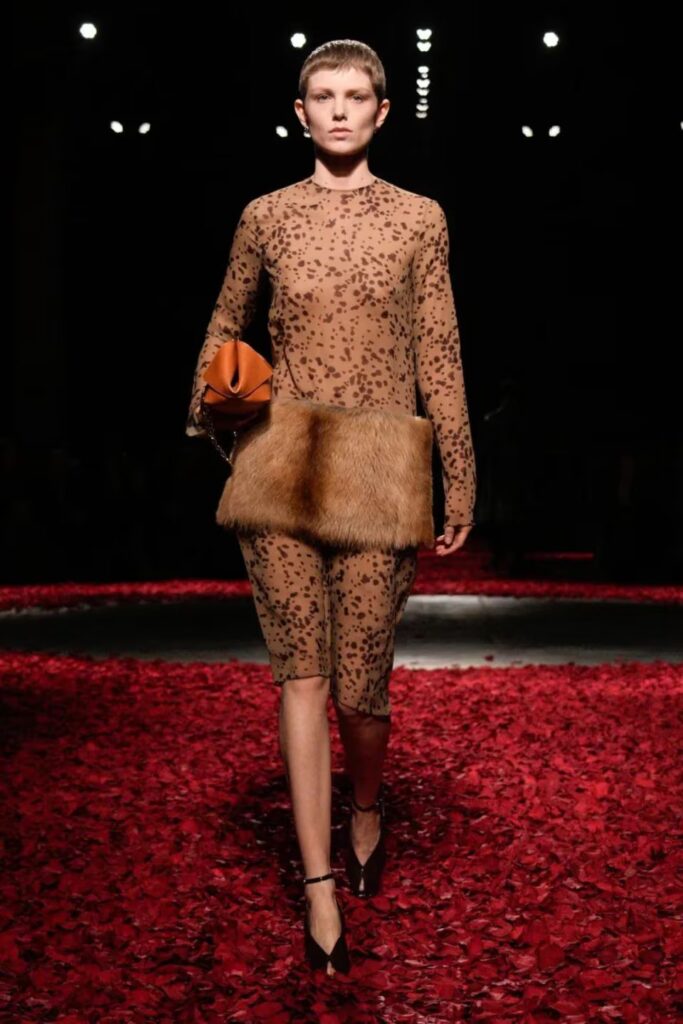
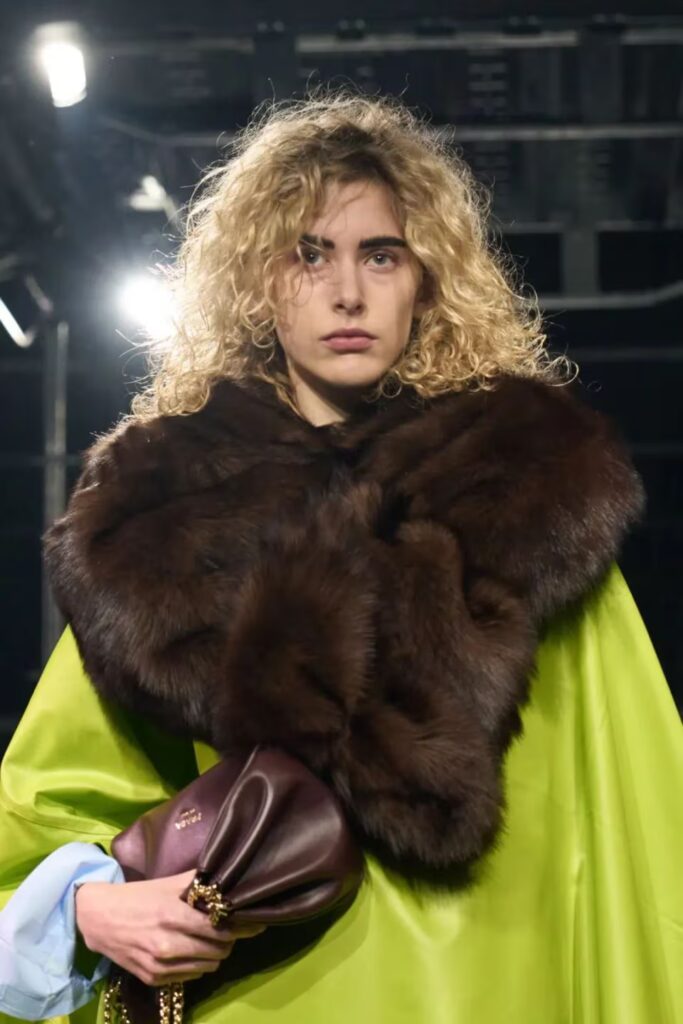
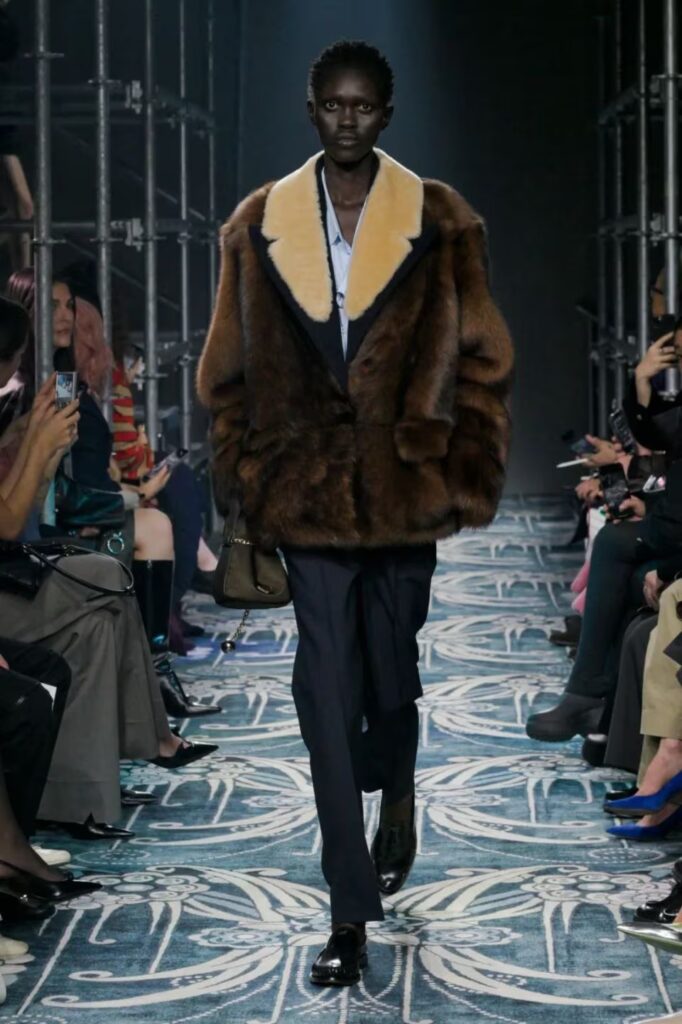
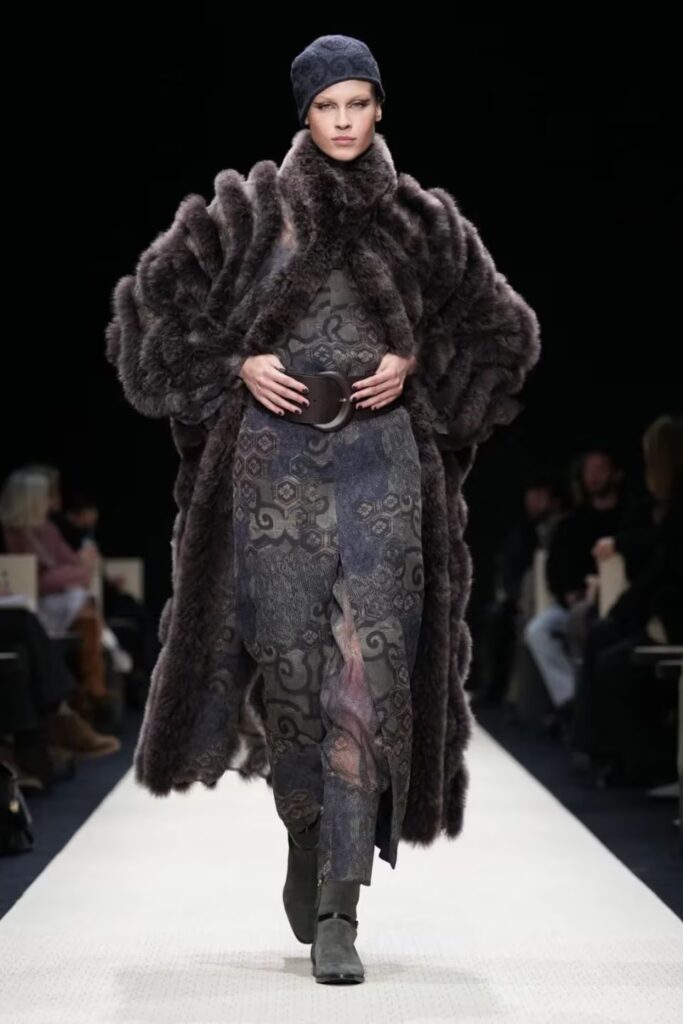
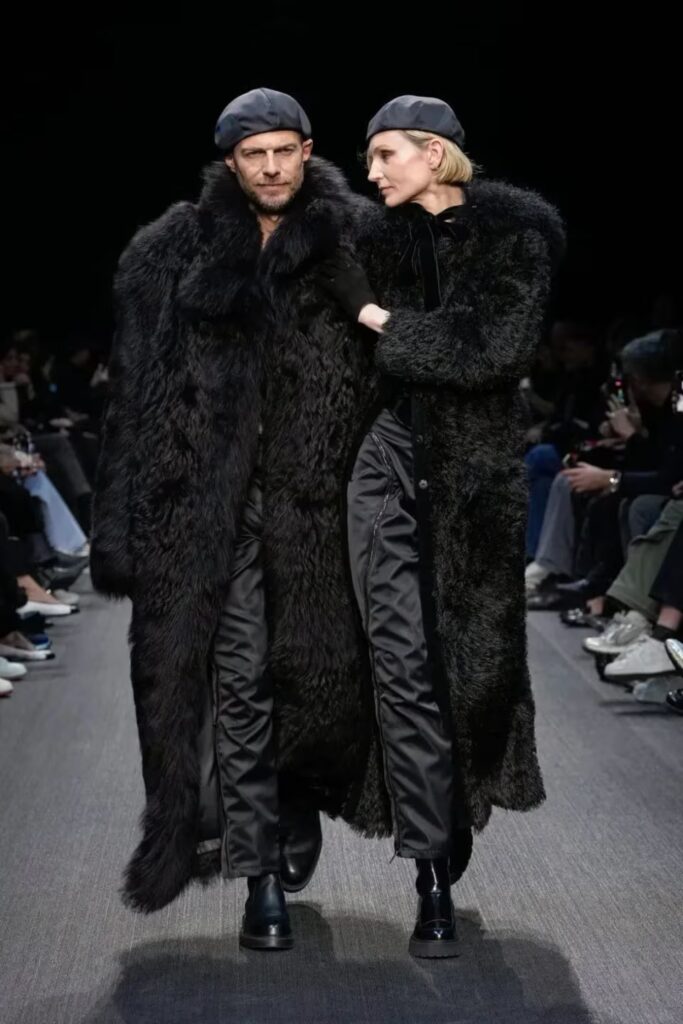
(Images: From top to bottom: Ferragamo, Chloé, Valentino, Etro 2025 Autumn/Winter Collections)
Rewind to March 2016. Perhaps inspired by the Paris Agreement at the UN Climate Change Conference (COP21) the previous year, Giorgio Armani announced that the brand would stop using animal fur starting from the 2016 Autumn/Winter collection, joining the “Fur Free Alliance.” At that time, the luxury industry members of this organization consisted of only a few brands, such as Calvin Klein, Ralph Lauren, Tommy Hilfiger, and Stella McCartney.
In the following two years, the organization grew rapidly to include Gucci, Saint Laurent, Balenciaga, Prada, Versace, Burberry, Chanel… Especially after the establishment of the sustainability coalition based on “The Fashion Pact,” spearheaded by Kering Group in 2019, this green fashion revolution—alongside the Me Too movement, LGBTQ empowerment, and the BLM movement—staged a spectacular performance. “Going fur-free” became a stance of political correctness, absorbing almost the entire fashion industry, leaving only brands like Fendi and Hermès without substantial commitments.
Tides rise and fall. As conservative forces regain power and Donald Trump ascends, those transformations are beginning to loosen. The ubiquitous fluffy silhouettes on the Autumn/Winter 2025 runways speak volumes.
01
Under a Conservative Political Climate, Opulent Aesthetics Are Reviving
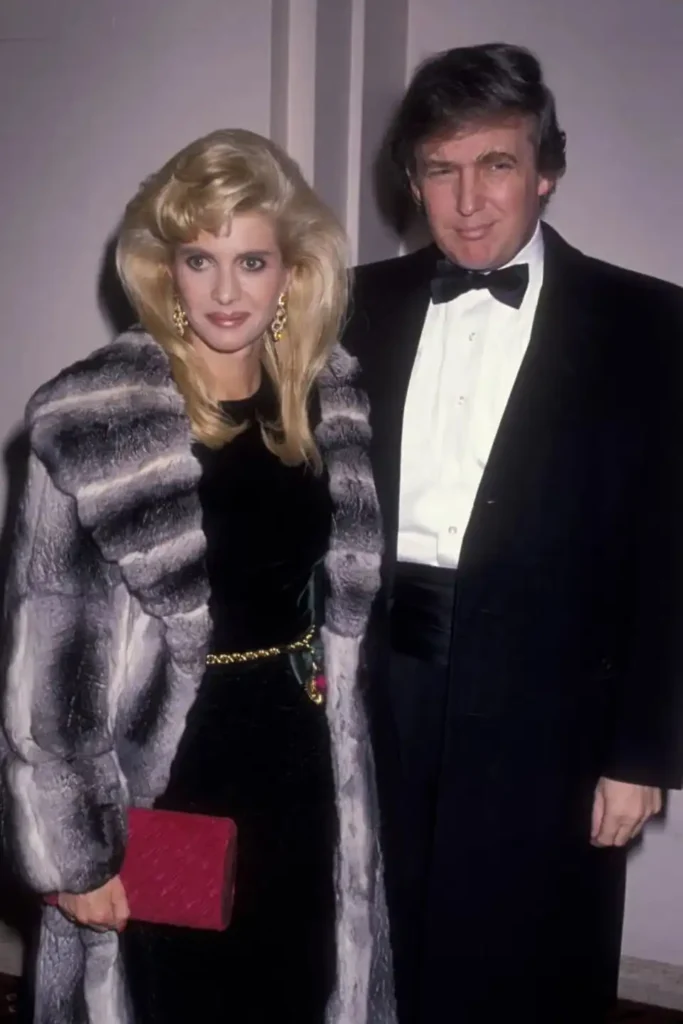
(1990, Donald Trump with his then-wife Ivana Trump, who is wearing fur)
Perhaps the “Mob Wife Aesthetic” that began trending on social media in Autumn/Winter 2024 was a signal. Gen Z, tired of the “Old Money” style, started wanting to dress in a wealthy and ostentatious manner, much like Carmella Soprano in The Sopranos. Accompanying this trend, “fur-style” coats have returned to the fashion stage with a high-profile, flamboyant image.
According to data from fashion trend search engine TagWalk, fluffy looks increased by only 10% from AW 2023 to AW 2024; however, from AW 2024 to AW 2025, this figure rose sharply by 33%.

(Fendi Autumn/Winter 2025 show. To commemorate the brand’s 100th anniversary, Creative Director Silvia Venturini Fendi recreated the fur equestrian look designed for her by Karl Lagerfeld when she was 6 years old, modeled on the runway by the twin sons of her daughter, Delfina Delettrez Fendi.)
Fendi, a house with a legacy of fur, is obviously the leader of this trend. Over the past few years, Kim Jones worked to downplay the influence of fur in Fendi’s fashion. His departure allowed Fendi to summon back this soul fabric. On the occasion of the brand’s 100th anniversary, Silvia Venturini Fendi opened the Autumn/Winter 2025 collection with the fifth generation of the family—her twin grandsons—wearing fur equestrian jackets. This stems from her earliest memory of Fendi: in 1966, for Karl Lagerfeld’s debut show as Fendi’s Creative Director, a 6-year-old Silvia walked the runway in a matching fur equestrian jacket designed by Karl.
Silvia re-examined the relationship between Fendi and fur. Through innovative craftsmanship, mohair or wool was used to create textures resembling mink. The red polka-dot “fur” was the pinnacle of this technique. While the entire show appeared full of “fur,” there was actually only one real mink coat.
This season, brands adopting similar techniques included Burberry, Ferragamo, Prada, Giorgio Armani, Dolce & Gabbana, and Tod’s. These brands used sheepskin and wool synthesis technologies to make lambskin products look like mink, fox, or badger. Dolce & Gabbana used sheepskin to create a white fox-tail effect, densely decorated into a voluminous coat. Giorgio Armani and Emporio Armani released ultra-long shearling coats. Prada displayed sheepskin prominently at the collar, like a caveman cherishing an animal hide. Tod’s sheepskin coats looked classic, evoking memories of fur.
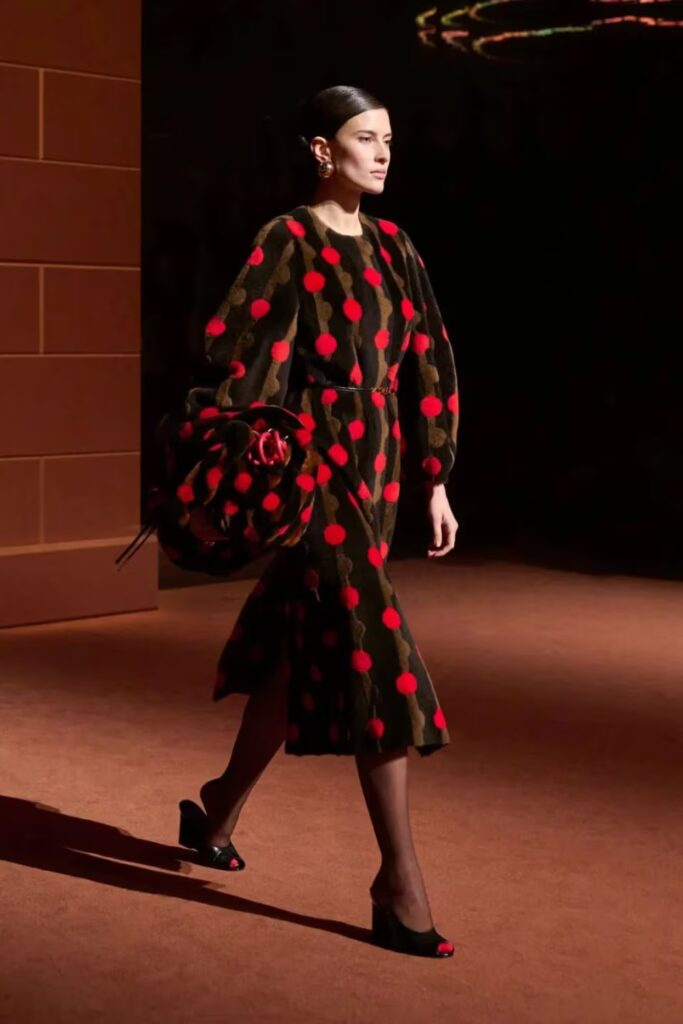
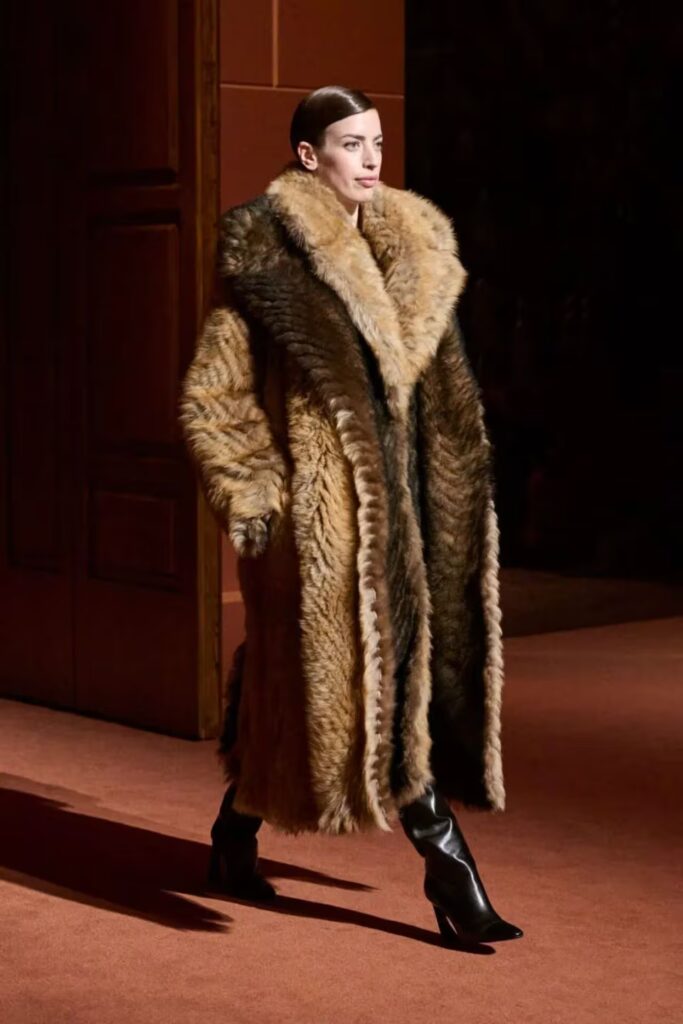
(Images in order: Fendi, Burberry, Ferragamo, Prada, Giorgio Armani, Emporio Armani, Dolce & Gabbana, Tod’s 2025 Autumn/Winter Collections)
This sheepskin material is made by tanning and preserving the skin of lambs or sheep that have been freshly sheared. Typically, corporate fur bans do not include sheared sheepskin. Unlike animals such as mink, sheep are raised for food, and their skin is a by-product. Some views hold that lambskin is closer to leather than to fur. PJ Smith, Director of Fashion Policy at the Humane Society (referred to as Humane World for Animals), stated that tracking the shearling market and its impact on animals is difficult: “It’s hard to say if shearling numbers are up or down because it’s so tied to the meat trade and wool trade.”
Nevertheless, protesters representing animal rights organizations still stormed some runways at the “Big Four” fashion weeks that feature leather as a selling point: Coach in New York, Burberry in London, Gucci in Milan, and Hermès in Paris.
02
The Possibilities of Faux Fur
In fact, most of the pieces showcased during the entire fashion month were not real animal fur, but man-made. Faux fur is no longer the cheap plastic fiber made of polyester or acrylic from the past; it is natural fiber that looks more realistic, such as wool, cotton, or linen.
From New York to Paris, from Michael Kors to Schiaparelli, fluffy textures filled the runways. Alaïa used wool, looping the fibers through knitting and then cutting and brushing them to mimic the effect of shearing, creating a plush look. Balenciaga used wool to create a mink-like effect. Michael Kors contributed matcha-colored dyed “fur.” Roberto Cavalli mixed leopard print with fox patterns in faux fur to evoke the glitz of the 1980s.
Rabanne carried the fluffy texture through to the end, turning the faux fur lining into a silver sequin material with a similar effect, contrasting interestingly with the silver sequin dress worn underneath. Ferrari and Schiaparelli also introduced faux fur skirts and trousers. Bally used faux fur as piping “growing” from the hem of skirts. Chloé combined this faux fur material with lace, chiffon, and ruffles to form a new “boho style.” Miu Miu dressed girls up like Cindy Sherman, carrying faux fur stoles.
Many brands are reluctant to reveal what materials they use to replace real fur, because synthetic fibers struggle to compete with real fur in terms of warmth. Simone Rocha admitted they used acrylic fibers made from stock at an Italian factory and new faux fur. Ganni used recycled polyester in its faux fur coats. Swedish brand Hodakova upcycled vintage fur hats into coats, while Gabriela Hearst repurposed recycled mink coats in her new collection.
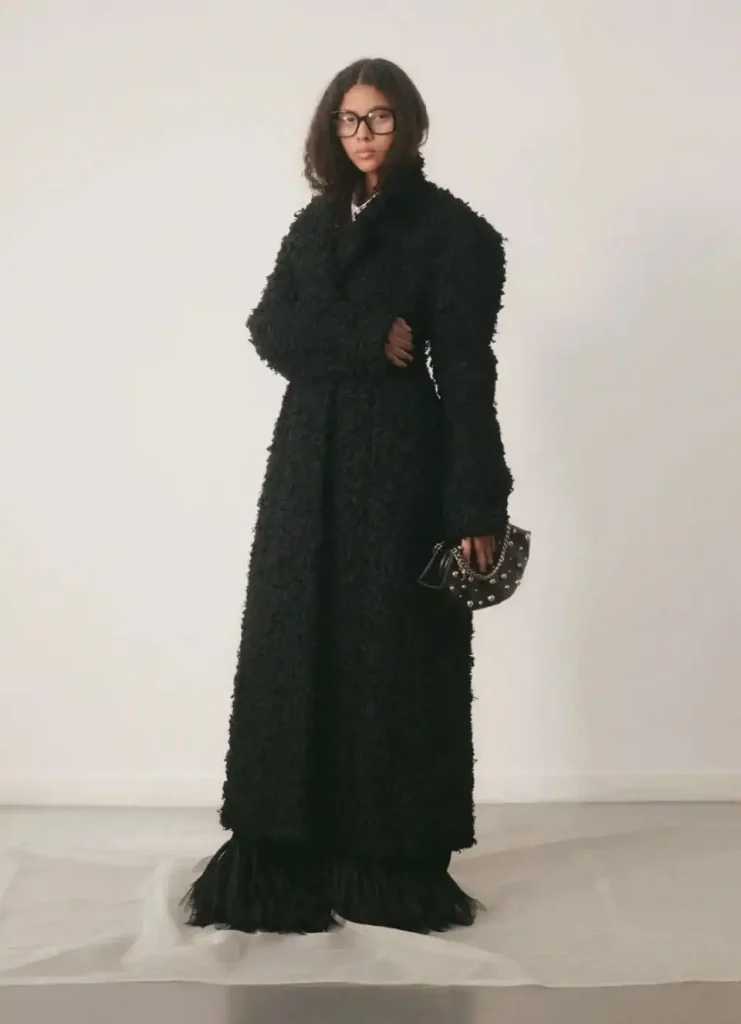
(Stella McCartney Pre-Fall 2024 coat made from Savian, a plant-based faux fur material)
Plant-based faux fur alternatives are a better choice. These products are neither plastic nor animal-based, aligning better with the original intent of “green fashion,” much like lab-grown mycelium leather.
Stella McCartney introduced a coat made from the plant-based faux fur material Savian in her Pre-Fall 2024 collection. Savian is a faux fur material developed by the startup Biofluff in 2022, made from flax, nettle, and hemp fibers. This company was also a finalist for the LVMH Innovation Award in 2022, part of the LVMH group’s startup accelerator program “La Maison des Startups,” aimed at commercializing startup solutions. In 2024, one of the handbags launched by Ganni utilized Savian.
The LVMH Group has also been collaborating with Central Saint Martins and Imperial College London to develop lab-grown fur. LVMH stated that researchers are now working with a biotech startup to scale up this technology.
03
Will Real Fur Rise from the Ashes?
In 2023, the closure of Kopenhagen Fur, a 90-year-old fur auction house with nearly 70% global market share, may represent the end of an era.
The COVID-19 pandemic dealt a heavy blow to the Danish mink farming industry. War, economic downturns, and unfriendly geopolitics have affected the sales of these products. Meanwhile, decades of lobbying by animal protection organizations have successfully led most brands, retailers, and even certain countries to implement fur bans.
Prices of fur products have skyrocketed further due to scarcity. At top luxury brands that still sell fur, a mink coat usually starts at $10,000 and can reach tens of thousands of dollars. Many consumers who want to follow the trend will choose second-hand fur rather than new. This is both an ethical choice and an economic one.
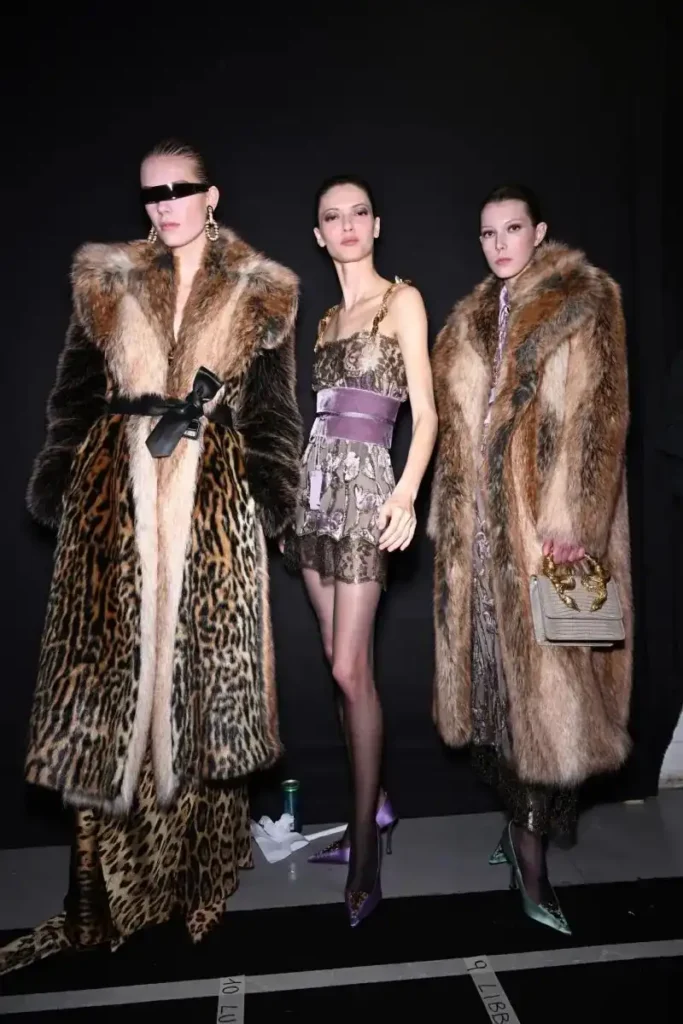
(Roberto Cavalli Autumn/Winter 2025 using faux fur mixing leopard print and fox patterns)
As many brands shift to alternatives, faux fur products may be the true beneficiaries of this trend. Regardless of what those fluffy things are made of, when people see them, they think of fur.