
Wool-Like Fibers
Wool-like fibers (also known as wool-imitation fibers) are synthetic fibers designed to mimic the style and characteristics of wool fabrics. The goal is to produce synthetic fabrics that can replace natural wool.
Performance Requirements for Wool-Like Chemical Fibers:
- Tensile properties should resemble wool: The tensile performance of the synthetic fiber should be similar to that of wool. Some chemical fibers have excessively high work of rupture (toughness), which negatively affects anti-pilling performance. Therefore, a higher work of rupture is not always better; it should be controlled within an appropriate range. Generally, the strength and work of rupture only need to match the levels found in wool.
- Appropriate Crimp: Wool-like fibers should possess suitable crimp properties. Through crimping processes, fibers can form curves similar to natural wool, giving the fabric a fluffy, soft, and elastic hand feel and style, creating a strong “wool-like” sensation.
- Compression Properties: The fiber assembly should have a moderately low initial compression modulus, moderate-to-high compression density, and a high elastic recovery rate. Compression elasticity is directly related to fabric styles such as hand feel, softness, elasticity, and bulkiness.
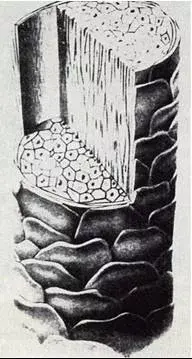
Technical Approaches to Synthetic Wool Imitation
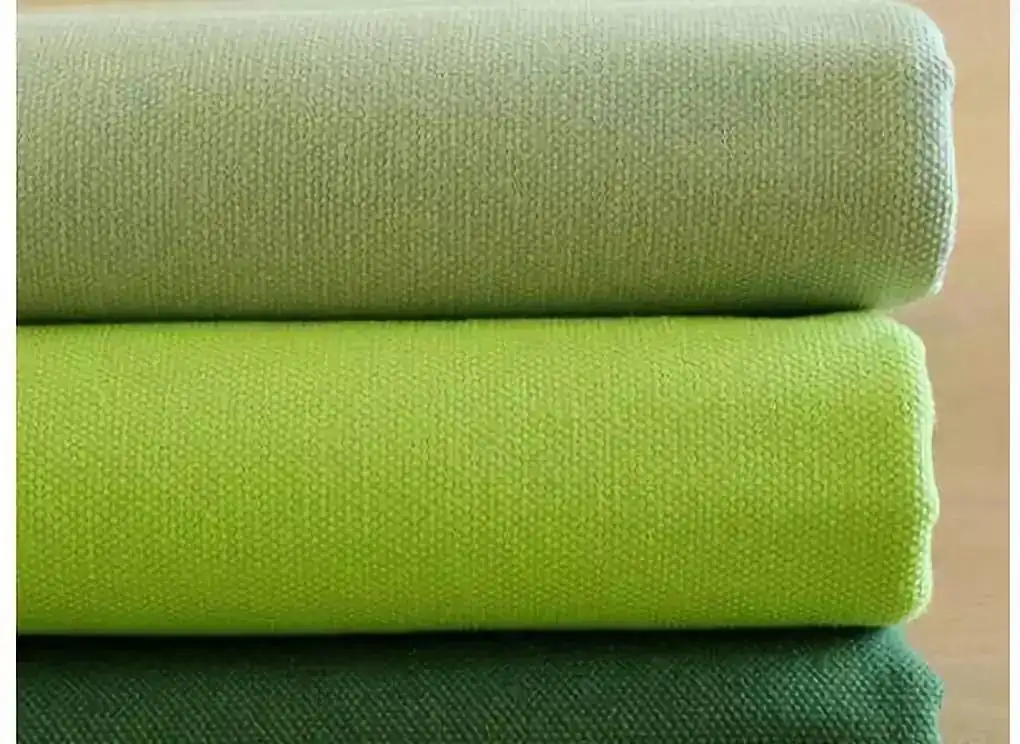
There are two main technical approaches to creating synthetic wool-like products:
- Fiber Imitation: Developing fibers that mimic the morphological structure and performance of wool fibers.
- Fabric Imitation: Imitating the appearance, style, and performance of wool fabrics through the synergistic effects of spinning, weaving, and dyeing/finishing processes.
1. Short Fiber (Staple Fiber) Imitation
This approach simulates the length and fineness of wool. Fibers are cut to match the average length and linear density of wool, forming specialized specifications such as 2.75 dtex × 51mm or 3.33 dtex × 76mm. The main raw materials used are Polyester, Acrylic, Nylon (Polyamide), and Viscose.
2. Medium-Long Fiber Imitation
Medium-long fibers have a cut length generally between 51-76mm, sitting between Cotton-type (38-41mm) and Wool-type (78-124mm).
- (1) Viscose/Nylon Blends: Popular from the late 1950s to the early 1980s. Typically 85% Viscose and 15% Nylon, processed using wool-type dyeing and finishing technologies.
- (2) Polyester/Viscose Blends (TR): Originally introduced to the Chinese market via Hong Kong from Japan, often called “Kuai Ba” (or Gabardine-like). Because polyester and viscose have different but excellent wearable properties, blending them provided ideal complementary effects. However, disadvantages included a poor wool-like feel (too much like cotton), tendency to look old/worn, ease of staining, and susceptibility to burn holes from ash/sparks. This category declined rapidly in the mid-1980s.
- (3) Polyester/Acrylic Blends: Primarily polyester-based mid-length fabrics saw some development. Because of the acrylic content (low specific gravity, good fluffiness, soft and elastic fibers), it was internationally termed “Synthetic Wool.” While the wool-like effect was improved, dyeing was difficult (requiring separate bath methods due to different dye properties) and processing was long and complex. Consequently, its development was largely limited to knitting yarns and knitwear.
3. Filament Imitation
Filament wool imitation evolved alongside texturing (deformation) technology. From the 1970s to the 1990s, various texturing processes were used to overcome the inherent flaws of filament yarns (smooth surface, artificial waxy luster, stiffness, lack of elasticity). These processes gave filaments the characteristics of staple yarns while avoiding the pilling issues associated with short fibers.
In the 1990s, “thick and thin” (slub) technology was developed, creating variations in thickness along a single filament. Some filament wool-like fabrics have achieved astonishing development, reaching a level of “high simulation” or “super realism” where the hand feel and appearance are nearly indistinguishable from real wool, while offering superior quality and performance.
Production Methods of Common Wool-Like Chemical Fibers
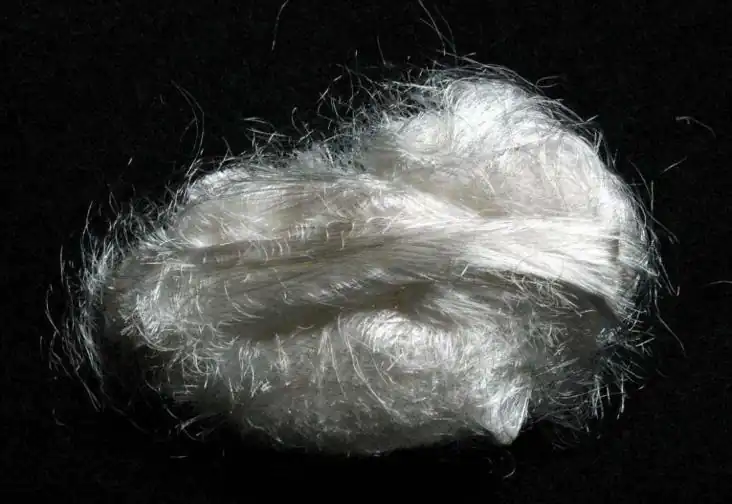
Initially, chemical fiber wool imitation focused on mimicking the length and fineness of wool (e.g., 2.5–3.3 dtex, 51–102 mm). Currently, common wool-like chemical fibers include high-shrinkage fibers, profiled (shaped) fibers, composite fibers, cationic dyeable polyester, flame-retardant fibers, superfine fibers (microfibers), air-textured yarns, and commingled yarns.
1. High-Shrinkage Fibers
These fibers shrink significantly under heat. The two most common types are High-Shrinkage Acrylic and High-Shrinkage Polyester.
- (1) High-Shrinkage Acrylic:
Since acrylic lacks strictly defined crystalline and amorphous regions, its ordered structure cannot prevent large-scale thermal motion of chain segments. This gives acrylic unique thermal elasticity, allowing it to shrink and produce bulked yarns.- Production Method:
- Stretching Method: Stretching the fiber multiple times above its glass transition temperature to align the macromolecular chains, then cooling rapidly to fix the tension. When reheated in a relaxed state, the fiber shrinks significantly.
- Chemical Modification: Increasing the content of the second monomer (methyl acrylate) or copolymerizing with a thermoplastic second monomer to reduce the tightness of the molecular arrangement, thereby significantly increasing shrinkage.
- Production Method:
- (2) High-Shrinkage Polyester:
- Production Method: Generally obtained by modifying crystalline polyester.
- Process Modification: Special spinning and drawing processes (e.g., POY yarn subjected to low-temperature drawing and setting) can yield polyester with 15%-50% boiling water shrinkage.
- Chemical Modification: Producing modified copolyesters prior to spinning.
- Production Method: Generally obtained by modifying crystalline polyester.
2. Profiled (Shaped) Fibers
These are fibers with a non-circular cross-section.
- Production: Spun using spinnerets with non-circular holes via melt spinning or solution spinning. Shapes include triangle, polygonal, multilobal, flat, hollow, and multi-hollow. The goal is to improve hand feel, luster, moisture absorption, and fluffiness.
3. Composite (Bicomponent) Fibers
Composite fibers consists of two or more polymers (or the same polymer with different properties) combined in a specific arrangement. They can be engineered for special functions like high crimp, easy dyeing, flame retardancy, anti-static, or high moisture absorption. Based on distribution, they are classified as Side-by-Side, Sheath-Core, or Matrix-Fibril.
- Application: Side-by-side composite fibers are widely used in wool imitation because selecting components with different shrinkage rates creates a self-crimping effect.
- Product Development: Natural wool has a crimp due to its bilateral structure of orthocortex and paracortex cells. To mimic this, chemical fibers are spun with two components having different shrinkage rates in a side-by-side configuration (e.g., Polyamide/Polyester, or Polyurethane Polyether/Polyacrylonitrile). This results in fibers with excellent durable crimp, fluffiness, resilience, and warmth, providing a smooth, waxy hand feel and a natural, elegant appearance.
4. Flame-Retardant Fibers
To mimic the naturally low flammability of wool, synthetic fibers can be made flame retardant.
- Production:
- Copolymerization: Using monomers containing flame-retardant elements (Cl, Br, P, etc.) to create a flame-retardant polymer before spinning.
- Blending: Adding flame retardants to the spinning melt or solution.
- Common Types: Flame-retardant Polyester, Flame-retardant Acrylic, Flame-retardant Polypropylene.
5. Superfine Fibers (Microfibers)
Japanese standards classify fibers with a linear density below 0.3 dtex as superfine fibers. They offer a soft hand feel and high wearing comfort.
- Production:
- Direct Spinning: Using traditional melt spinning methods (technically challenging for very fine deniers).
- Composite Spinning: Using composite spinning technology to create bicomponent fibers (like Sea-Island type). These are then treated mechanically or chemically to separate the components or dissolve one component (the “sea”), leaving the “islands” as superfine fibers.